
24 September 2026
This Saturday the Fremantle Dockers will meet the Brisbane Lions in front of 100,000 spectators at the MCG to decide who takes home the premiership for the 2026 season.
It’s football’s biggest day and arguably the biggest day on the Australian sporting calendar.
But how did it all begin?
Before British colonisation, Aboriginal people in south-eastern Australia played various forms of football. Wurundjeri men played a game that involved kicking a possum-skin ball and leaping to great heights to catch it. Aboriginal versions of football are commonly referred to as Marn-grook.
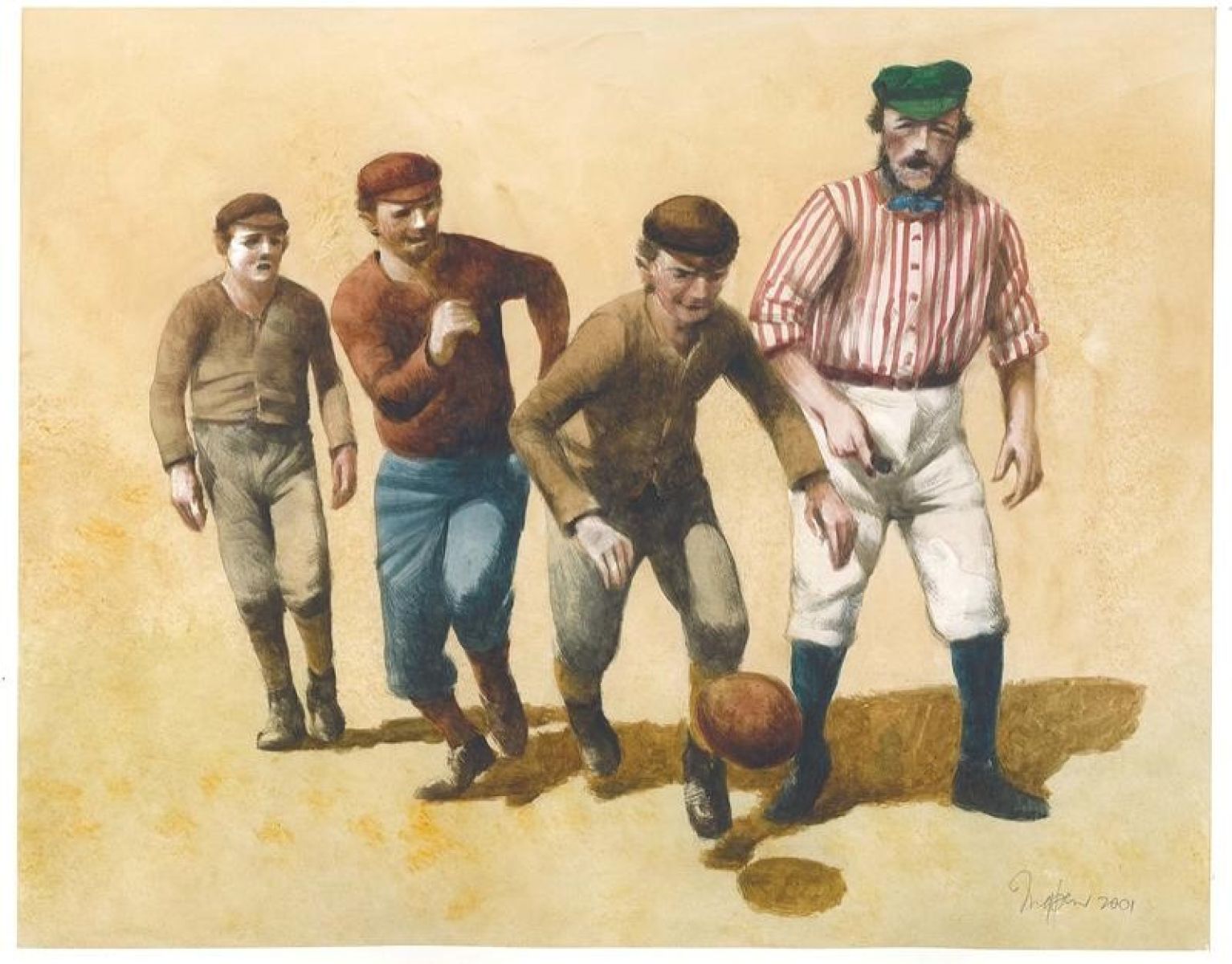
Colonists from England, Scotland and Ireland soon brought various forms of football to Melbourne. Casual matches were played, though there was no 'common code' of football.
In 1858, Victorian cricketer Tom Wills published a letter in a newspaper suggesting the creation of a formalised code of football. It was his hope that such a game would keep cricketers fit during the winter months.
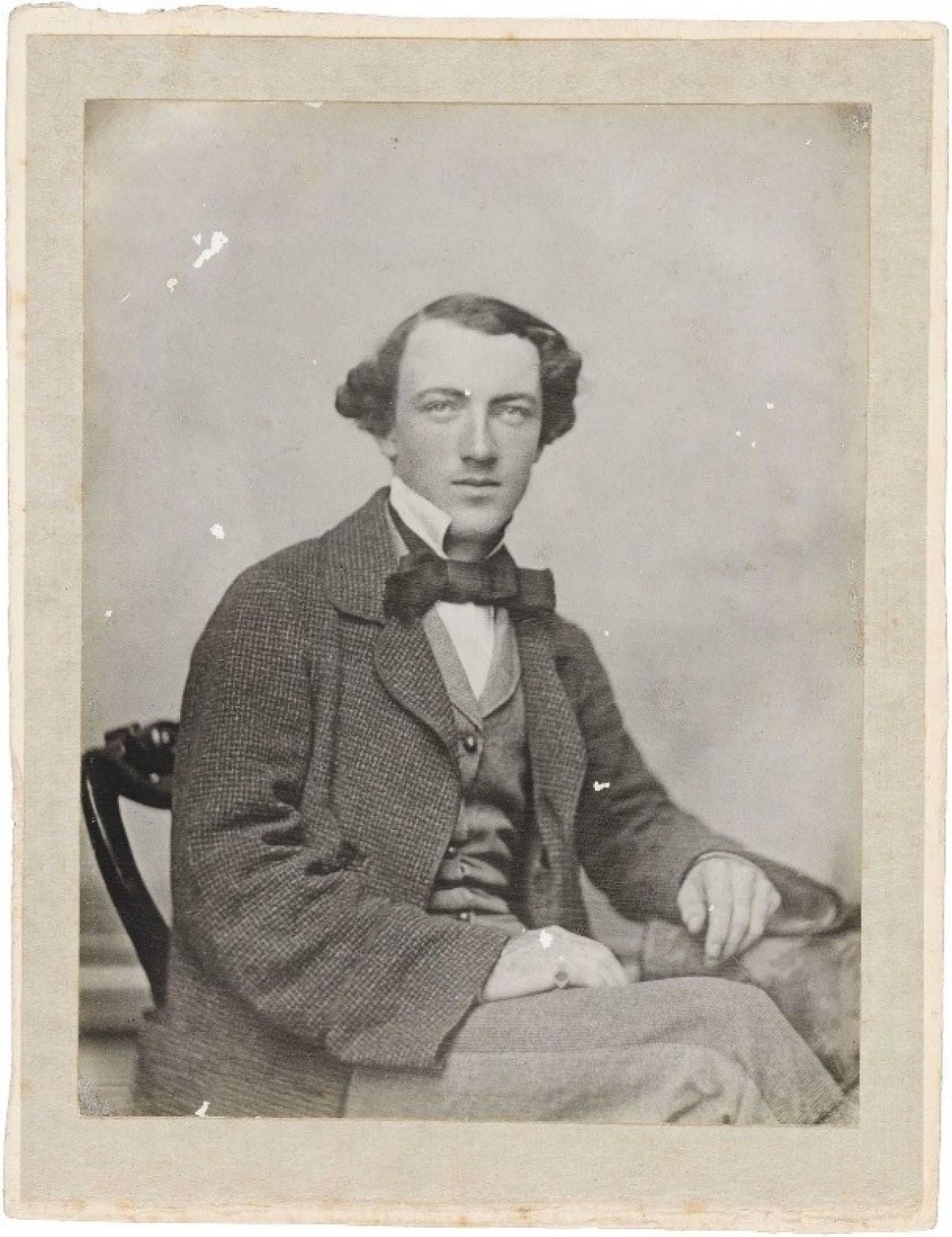
On 17 May 1859, cricketers Tom Wills, William Hammerlsey, James Thompson and Thomas Henry Smith met at the Parade Hotel in Jolimont to draw up the Rules of the Melbourne Football Club.
The document outlined 10 rules of the game, establishing several of the fundamental elements of Australian rules football. Examples include the concept of ‘marking’ the ball, and not allowing the ball to be thrown at any time. These characteristics have endured to the present day and are part of what makes the Australian game unique.
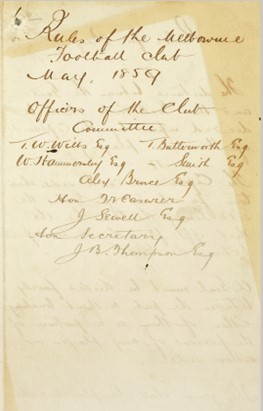
The 1859 document was lost for many years before it was rediscovered by the Melbourne Cricket Club in 1980. The Rules are now held by the MCC in their archives at the Melbourne Cricket Ground, just below where the Brisbane Lions and the Freemantle Dockers will be playing this Grand Final day.
The 'Rules of the Melbourne Football Club' document was added to the Victorian Heritage Register in February 2025.
The game would continue to develop and evolve over the next 160 years to the high-performance, professional sport we know today. Its origins, at least in codified form, can be traced back to the Parade Hotel in 1859.
Learn more about the Rules of the Melbourne Football Club on the Victorian Heritage Database.
Page last updated: 24/09/26