
29 July 2026
In October last year, a shipwreck was discovered on Point Lonsdale Beach by local beach walkers Mark and Lucy Longden. The wreck was exposed by erosion that had been impacting the beach. Mark and Lucy reported the find to the Queenscliffe Maritime Museum, who in turn notified Heritage Victoria. Maritime archaeologists from Heritage Victoria inspected the site accompanied by Mark Longden and Jamie McKechnie from Queenscliffe Maritime Museum.
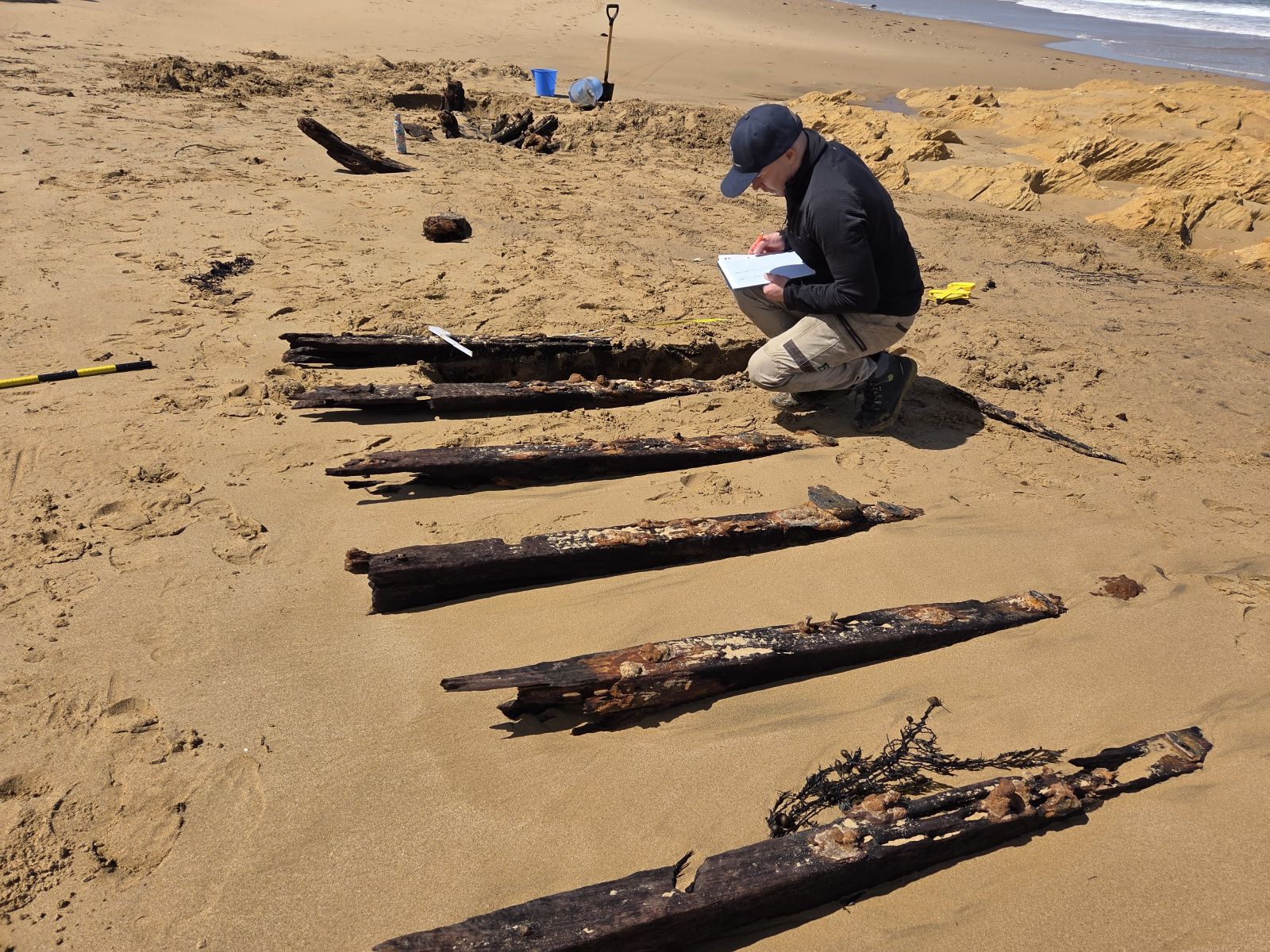
The shipwreck was located two kilometres northwest of Point Lonsdale and a short distance from the Light of the Age shipwreck site. It was situated at the top of the beach and was dry at low tide but completely submerged at high tide. Timber frames could be seen protruding through the sand, along with timbers that form one end of the ship, either the bow or the stern, pointing in a southeast direction. Small excavation trenches were dug around the end timbers and between two frames in the mid-ship region.
The visible end was determined to be the bow due to the lack of any gudgeons (parts of the rudder hinge). The frame timbers were flat, suggesting that it was a flat bottom vessel and the dimensions of the timbers indicated that the ship was a relatively small sized vessel approximately 20 metres long. Only half of the length of the ship, below the bilge, remained. The aft half of the ship could not be located. A deadeye chainplate, which is a part of the ship’s rigging, was the only artefact found on the site. The presence of a chainplate and the lack of any engine parts indicated that this was a sailing vessel.
Timber samples for wood species identification were collected from the framing, planking and deadwood timbers to analyse where the vessel was likely to have been built. The wood species analysis identified the frame timber as Eucalyptus diversicolor (jarrah) and both planking and deadwood timbers as Pinus sylvestris (baltic pine). Jarrah is an Australian hard eucalypt species which suggested that this was an Australian built vessel. By putting all this evidence together and reviewing the historical record for shipwrecks within the Point Lonsdale region, the maritime archaeologists were able to identify the shipwreck as Maffra.
Maffra was a 46-ton, 71 foot (21.6 metres), wooden schooner built in 1876 on the Yarra Bank, Victoria. It operated as coastal trader transporting cargo between Lakes Entrance and Melbourne and was built with a shallow draft (flat bottom) to help it navigate the shallow waters at Lakes Entrance. On its final voyage, Maffra departed Lakes Entrance with a cargo of hard wood and bark. It reached Port Phillip Heads on the 6th of May 1888 but was unable to enter due to a strong northerly wind. A gust tore through its sails and the vessel became unmanageable. Maffra drifted onto a reef, breaking its stern post and rudder. Waves then lifted the vessel up over the reef and onto the beach two miles west of Point Lonsdale. As the tide dropped, the crew found that the stranded vessel was high and dry on the beach and were able to climb down off the ship. A newspaper report published by the Age stated that Maffra was lying on the beach a short distance from the wreck of Light of the Age. The crew endeavoured to repair and refloat Maffra, but after three months, they halted their efforts and Maffra was abandoned.
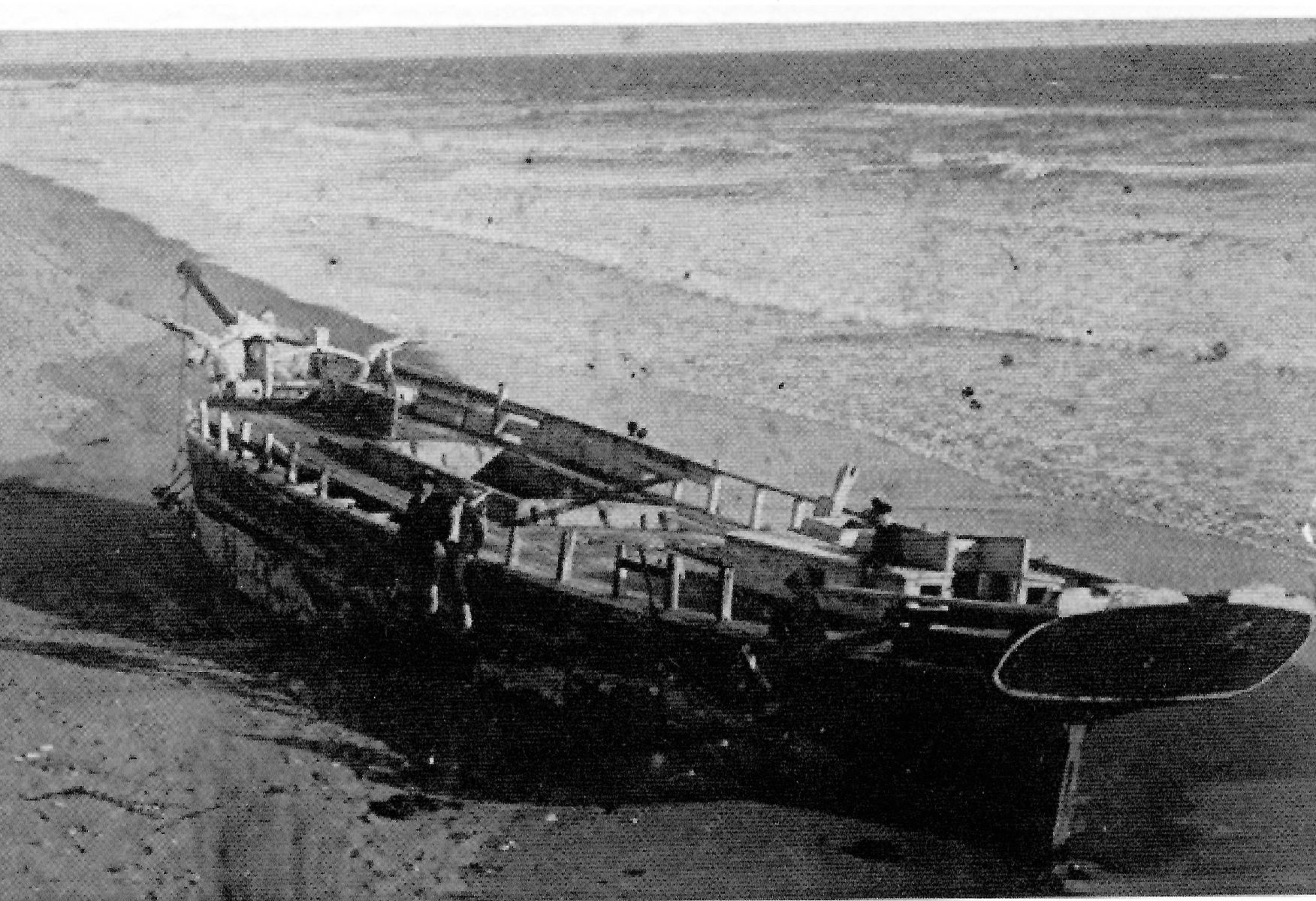
Research identified an historic image showing Maffra stranded on Point Lonsdale Beach. Maffra is in the same orientation as it was found in October. The bow is pointing southeast towards Point Lonsdale, and the stern is facing towards the northwest.
Page last updated: 05/08/26